
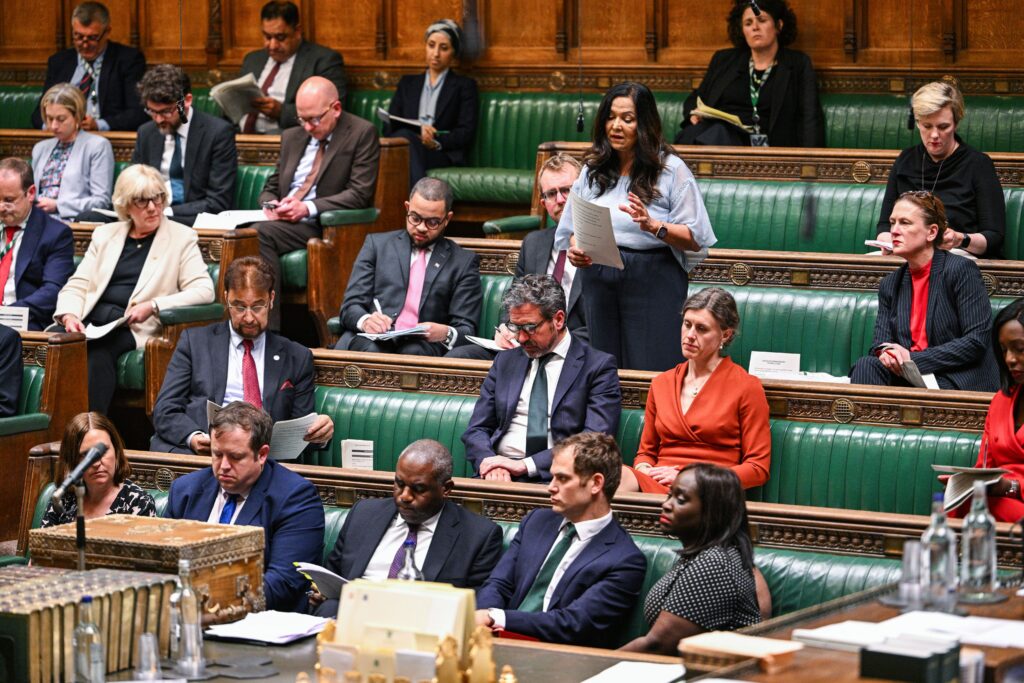
Below is the speech I was due to give in Parliament on Thursday 5th February 2026 in a debate on Road Safety, however, due to a serious family emergency that required my immediate attention, I had to leave Westminster at short notice and was unable to be present in the Chamber.
Thank you, Madam Deputy Speaker.
I rise today with a heavy heart, because road safety is not an abstract policy issue in my constituency.
It is a matter of recent, devastating loss.
Just weeks ago, four people lost their lives in a tragic road traffic collision in Bolton South and Walkden. Among them was Masrob Ali, a 54-year-old taxi driver, a husband and a father of four, described by his family as “the gentlest soul”.
Mr Ali was simply doing his job. Expecting, as any of us would, to return home safely.
He did nothing wrong.
He was killed when another vehicle crossed into his path in the early hours of the morning.
Three young people in that vehicle also lost their lives.
They were teenagers from the community, and their families too are grieving children with their whole lives ahead of them.
Several others were seriously injured, including passengers travelling in Mr Ali’s taxi, some of whom remain in hospital.
This single collision has devastated multiple families and shaken the whole community.
It forces us to confront an uncomfortable truth.
When extreme risk, inexperience and speed combine, the outcome is too often catastrophic.
This must not be dismissed as an “accident”.
Sadly, Bolton has seen other serious and fatal incidents in recent months.
Two women lost their lives while walking along Smithills Dean Road in neighbouring Bolton West, and elsewhere a young girl was hit while crossing a busy junction, leaving lasting trauma for her family and change coming only after years of campaigning.
For many years, residents and community voices in Bolton and Walkden have raised concerns about dangerous driving and unsafe roads, often after repeated incidents on the same stretches.
What we are seeing locally reflects a wider and deeply concerning pattern across Greater Manchester and indeed nationally.
Greater Manchester has adopted a Vision Zero ambition to eliminate deaths and serious injuries by 2040.
That is the right goal.
Yet the most recent data shows that in 2024, the number of people killed or seriously injured on our roads increased rather than fell.
Young drivers account for around 20 per cent of those killed or seriously injured, despite making up only 11 per cent of drivers, and speed is a factor in almost three fifths of road deaths.
This is not about blaming young people. It is about recognising risk and designing systems that protect people while experience is still being built.
While the National Road Safety Strategy is a welcome step forward, from my work with partners across Greater Manchester it is clear that more national action is needed on young driver risk, speed management, and on giving local areas the powers and funding to intervene earlier.
That is why I am calling for serious consideration of a graduated driving licence system, focused on protecting new drivers while they build experience.
This is not about punishment, it is about saving lives.
Other countries have shown that this works, and Northern Ireland is already moving ahead with reform.
But licensing alone is not enough.
Ahead of today’s debate, I asked my constituents directly what would make our roads safer, and the response has been overwhelming.
Residents spoke about excessive speed, racing culture, lack of traffic policing, dangerous parking, and the limits of single speed cameras.
I have also received detailed representations from community organisations working closely with residents in the Rumworth ward of my constituency. They highlighted a succession of road traffic collisions over a matter of days in January on roads including Derby Street, St Helens Road, Willows Lane and Deane Church Lane.
These are busy routes near homes, schools, businesses, and places of worship.
Residents spoke of fear for pedestrians, families, and children, and a growing sense that serious harm is only narrowly being avoided.
They raised concerns about excessive speed, poor visibility, inadequate enforcement, and the frustration of seeing agreed safety measures left unimplemented for years.
What comes through most clearly is fear and frustration.
People feel they are raising concerns repeatedly, and that action too often comes only after someone has been seriously injured or killed.
That is why we need earlier intervention. Better use of data. Stronger enforcement. And the resources for councils to act before lives are lost.
We also need to change the culture around dangerous driving. Just as drink driving was once normalised until society decided it was unacceptable, reckless and unsafe driving must now be recognised as anti-social behaviour that puts lives at risk.
That means education, listening to those affected, and treating road safety as a public health issue.
So today, I urge the Government to treat road safety with the seriousness it deserves.
To move faster on reform, to support evidence-based interventions, and to ensure that communities like mine do not have to keep burying young people before action is taken.
We owe it to those who have lost their lives, and to those still travelling our roads, to do better.